Fresh food
“Grow Jackson is a fresh food access nonprofit that started in 2020. We fundamentally believe that food access, and more specifically fresh food access, is a human right. Regardless of what you look like, where you live, or how much money you make, we believe everyone should have enough to eat.
Gardening is our main initiative. When we started Grow Jackson, we perceived that a lot of people had gardens as supplemental—for kids, for seniors, or as an extension of programming. We thought it would be a good idea to provide capacity support and resources for people who have gardens but don’t want to maintain them year over year, whether it’s a senior living community, an elementary school, or a recovery and mental health nonprofit.
We started with two community gardens and have grown to 20. We use these as engagement spaces where we anchor education, community, capacity building, and positive experiences around growing and sharing fresh food. Our focus is getting people outside, getting their hands in the soil, learning about food, and thinking about where it comes from. Most kids don’t know that food comes from a farm—they think that food comes from Meijer or Walmart. Every year we do food tastings with kids, and without fail, a kid will try a blackberry or raspberry for the first time and say, ‘It’s like the blue raspberry Jolly Rancher!’ I’ll say, actually, the Jolly Rancher is like that. Kids bite into radishes and say it tastes spicy, like a Taki. Experiences like that let us know that we’re in the right spot, doing the right work.
Over the last five years, as programming has developed, we’ve added community nutrition programming like grocery giveaways, resource sharing, and hot community dinners in the gardens. We added a youth workforce program where we hire at-risk kids from area high schools and alternative programs to work for us for 10 weeks. They go through pre-apprenticeship training in environmental literacy, get resume support, paid work experience, and wraparound support so they can get to work, eat at home, and have proper work clothes.
They go through a financial literacy program that culminates in a savings match. A successful intern ends the summer with $1,000 in savings, a resume, paid experience, a letter of support, and connections to opportunities. This year, for the first time, we retained three interns for a 2.0 version called our Food Fellowship as a way to give them more responsibility by mentoring the next cohort.
We say a lot that everybody’s a learner and everybody’s a teacher. These young people flourish. These are often labeled ‘bad kids’. We have one who was funneled into alternative education in fourth grade and never had a traditional classroom experience. Since he was nine years old, he’s been labeled a bad kid. But you get him outside, show him love and support, put his hands to work, and he flourishes. He calls us on Saturdays asking to volunteer, asking how to come in early or stay late. He isn’t a bad kid! He’s just been in the wrong environment.
We use school and community gardens for education in the spring and fall, working in classrooms as a supplemental STEAM curriculum. In summer, it’s less academic—more about colors, shapes, where food comes from, why fresh food matters, food access, and food miles. With older kids, we get into food justice and sovereignty. What are the rights of farm workers, meat packers, delivery drivers? Are they being fairly compensated? We talk about the true cost of food and community health through food.
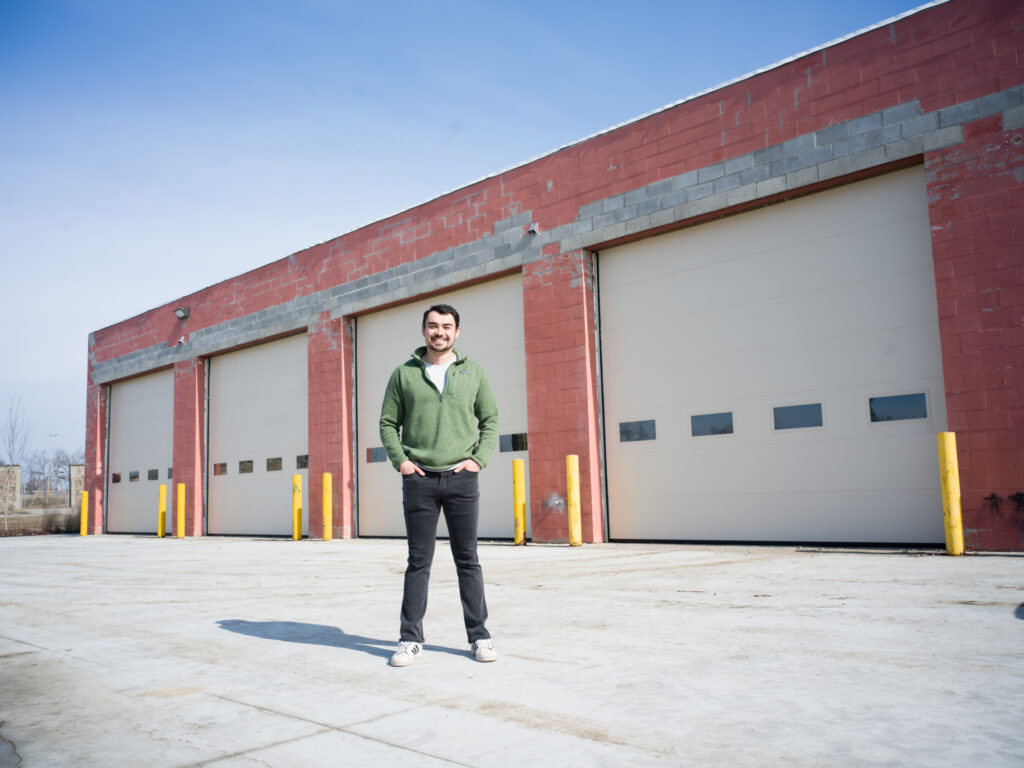
Today we’re at the food hub, which is a logical extension of our work. We’ve learned that education, accessibility, and affordability are three major barriers to food access, so we’re launching a locally sourced grocery store that pays farmers fairly. Because we aren’t able to purchase food in the huge volumes of big chains, the food will cost more than average grocery stores, but we’re expanding accessibility by accepting food stamps, Double Up Food Bucks, WIC, and offering a buy-one, give-one produce box model.
We’re focused on building a local food economy, stabilizing farm families, and creating a stronger fresh food supply chain.
We think a lot about systems, behavior change, and outcomes. Gardens are a great entry point and education tool, but they’re not immediate access. If someone is hungry, we don’t hand them a cabbage. We provide food bags and resources. A raw radish is not a dignified solution to food insecurity. Everything we grow, we give away, but that alone doesn’t solve food insecurity. We want people to think and act differently. We’re both giving a man a fish and teaching a man to fish in a holistic model. This food hub is the next step in building that system with weekly produce boxes, food processing, supporting food entrepreneurs, hosting food trucks, and reconnecting community around food.
We’ve become disconnected. We DoorDash food, we don’t see who made it, who delivered it, or where it came from. Indigenous communities used every part of the animal. Many of us come from families that grew gardens and hunted. As we’ve become more urban and commercial, we’ve lost that connection. But there’s honor in the harvest, in the life cycle. We are part of it. We want to slow food down and remind people it’s what nourishes and connects us. Food has been central to humanity for thousands of years, and we want people to know their farmers, eat seasonally, eat locally, and eat well.
Food travels an average of 1,500 miles to your plate. We want people to experience a Michigan blueberry in June and understand seasonality. We’ve become used to getting whatever we want, whenever we want it, but that’s not how ecosystems work. We’ve engineered around nature and sacrificed quality.
We want people to try new foods, experience real flavors, and understand what food is supposed to taste like. Many people don’t love food because of stress, access, or experience. But food is this incredible process—sunlight transformed through photosynthesis into nourishment.
We’ve lost that connection. How do we bring it back?
Plants are conscious in their own way. They communicate, respond, and exist within a shared system. When we think about food as a connection between those who grow it and those who eat it—not a fragmented supply chain—we create something meaningful.
This hub will reinvest everything back into food access and education. Our goal is to launch the farmers market here in May, open the store in July, and expand into mobile markets, processing, and distribution. We want to make it easier to eat well, grow food, buy local, and nourish your community.
We’re calling this the River and Rail Food Hub. We want to build something new.
The Grand River is right here—the longest river in Michigan—and Jackson has the country’s longest operating railroad station. These are assets tied to movement, connection, and opportunity. We want this to become a vibrant space for outdoor recreation, community health, and food access.”
—Jacob Inosencio, Grow Jackson
River and Rail Food Hub, 137 W. North St., Jackson, MI 49202